
Oncology
Injectable and oral therapies, biosimilars, hormonal and supportive care.
Read more →Specialty medicines · Patient access · Nepal
Cytolix connects trusted international manufacturers with Nepal’s healthcare system — managing registration, licensed import and nationwide market access so specialty therapies can reach patients wherever care is delivered.
Nationwide reach
Select any province to view its population, terrain, capital and the Cytolix network point serving that healthcare corridor.
One accountable route
Modern oncology, biological and complex injectable medicines require specialised manufacturing. We assess the manufacturer, the product-level authorisation and the route to Nepal before committing to a portfolio.
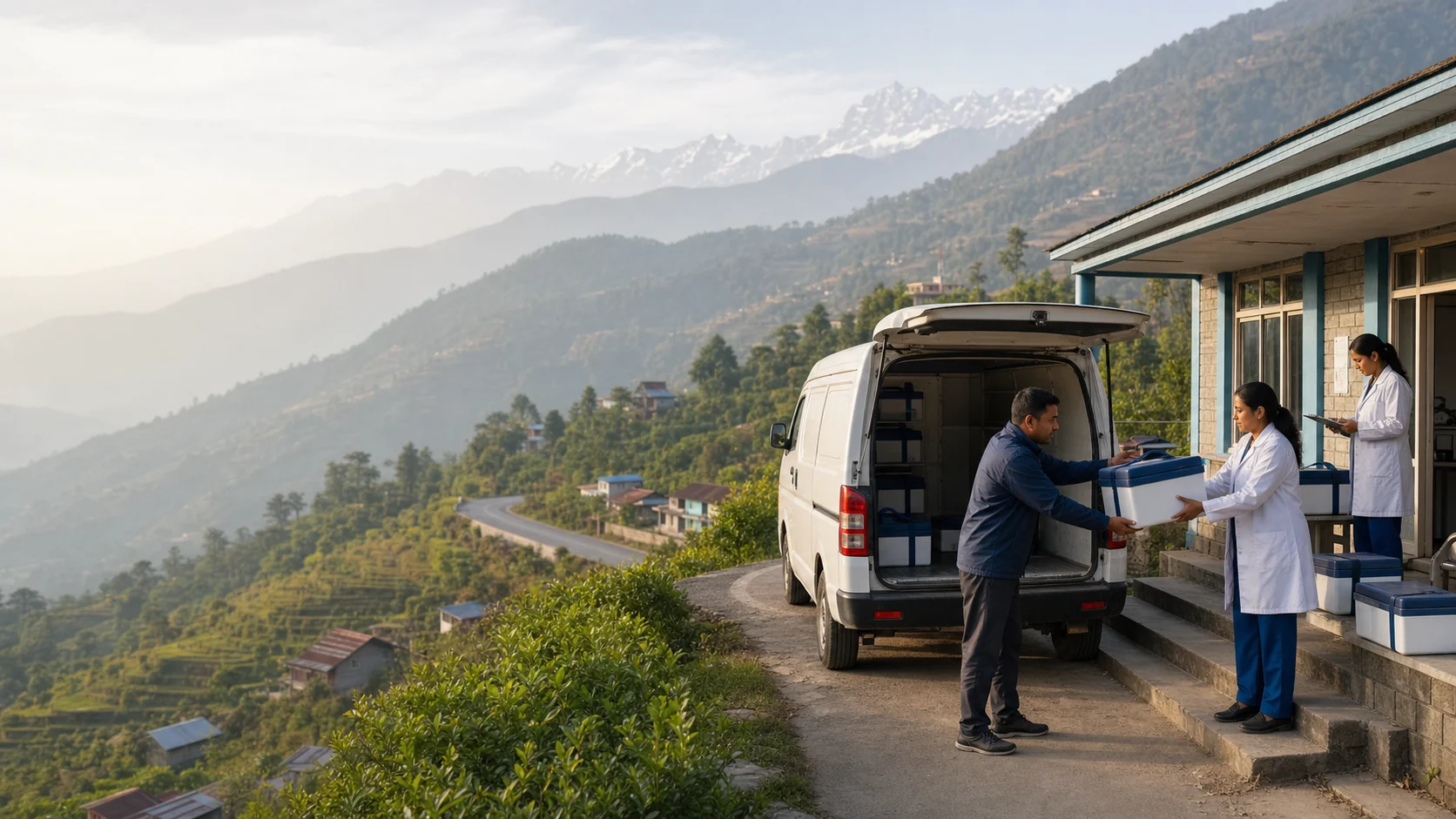
Himalaya, hills, valleys and the Terai plain each create a different access and logistics challenge. Our role is to build a controlled route from entry and storage to the institutions and regional channels that serve those communities.
A medicine in a warehouse has helped no one. Our work is to support reliable availability through hospitals, treatment centres and licensed pharmacy channels — closer to the patient who needs it.
Oncology · Nephrology & transplant · Critical care · Specialty medicines
For international manufacturers
Nepal’s health system has grown faster than its factories could follow. Domestic manufacturers now supply close to half the national market — a genuine achievement — but sterile oncology, biologics and complex injectables need capabilities that take decades to build anywhere in the world. Nepal’s patients need those medicines now, and roughly 390 foreign manufacturers already supply here through licensed importers.
A product-level authorisation from a stringent regulatory authority may support the regulatory assessment, but it does not replace Nepal’s company approval, product registration or import requirements. Cytolix evaluates the applicable route before commercial commitments are made.
We assess whether a product can be registered in Nepal before we discuss commercial terms.
Established institutional relationships across hospitals, oncology centres, and dialysis and transplant units.
Registration, licensed import, controlled storage, distribution and compliant scientific engagement coordinated through one partner.
Therapeutic focus
We do not carry a general portfolio. Cytolix works in the categories Nepal must still import — the ones that need controlled handling, specialist engagement and a manufacturing base that takes decades to build.
Injectable and oral therapies, biosimilars, hormonal and supportive care.
Read more →Dialysis support, renal anaemia, phosphate binders, immunosuppressants.
Read more →ICU medicines, parenterals, high-potency antibiotics, anaesthetics.
Read more →High-value niche medicines and specialised bio-therapeutics.
Read more →The case for coming to Nepal
Nepal’s own manufacturers supply close to half the national market — roughly NPR 24 billion of medicine a year, built from almost nothing in a single generation. That is an achievement, not a shortfall.
What they have not yet built is the second tier: sterile oncology suites, biologics capacity, lyophilisation lines, high-potency containment. Those take decades and enormous capital to stand up anywhere — which is why even the largest economies import their specialty medicines rather than make all of them.
Meanwhile the disease burden has moved. Non-communicable disease now drives the country’s mortality: cancer, kidney failure, cardiac and metabolic disease. Nepal treats more of these patients every year, in more centres, with better-trained specialists.
So the gap is not a weakness in Nepal. It is a timing problem — and it is the reason international manufacturers are needed here now.
Nepal has an established pathway for qualified international supply. Overseas manufacturer approval, product registration and licensed import remain mandatory, with requirements assessed product by product.
The question is not whether Nepal wants your medicines. It is who brings them, and how well.
Figures are drawn from published government, UN and peer-reviewed sources and are stated as indicative. Sources and methodology are available to qualified partners on request.
How we select products
These are not interchangeable, and treating them as though they were is the most common reason a registration attempt fails. We verify at product level — authorisation number, issuing authority and current status — before committing to a filing.
Authorities we prioritise
Our reach
From Kathmandu, eight major distribution centres and 42 sub-distribution channels extend controlled supply towards hospitals, treatment centres and licensed pharmacy channels across Nepal’s cities, plains, valleys, hills and remote communities.
Send us your portfolio and the regulatory status of each product. We will return an assessment of what can be registered here, and how quickly.